
In software development, shipping a new feature can feel like opening a valve. Sometimes nothing happens. Other times, revenue leaks out fast. A smart feature flags rollout keeps those risks in check.
That’s why I treat feature flags as a risk control tool first, and an experimentation tool second, following the principles of progressive delivery. When I’m responsible for conversion and pipeline, I don’t want hero launches. I want controlled exposure, clear analytics, and an easy way to back out.
In this post, I’ll show you how I use feature flags to roll out changes safely, run real A/B testing on top, and make better decision-making calls when the data is messy and the clock is ticking.
Feature flags: rollout control vs. true experimentation
A feature flag is a switch in your code that decides who sees what. In trunk-based development, modern teams rely on feature toggles to manage frequent deployments safely. The mistake I see is using one switch for everything: beta access, canary releases, A/B testing, and “oops turn it off” rollbacks. Those needs overlap, but the decisions are different.
Here’s the simplest way I keep the intent clear. I want you to pick the row that matches your situation before you ship.
| Use case | What I’m trying to learn | What can go wrong | Best practice |
|---|---|---|---|
| Gradual rollout | “Is it stable in the wild?” | Outages, latency, support tickets | Ramp slowly, watch error budgets, keep a kill switch |
| A/B testing | “Does this improve conversion?” | Biased samples, peeking, false wins | Random assignment, pre-set metrics, adequate sample size |
| Holdout | “What’s the long-run impact?” | Short-term lift hides long-term loss | Keep a small control group for weeks |
If you want a clean explanation of the boundary between rollouts and experiments, particularly decoupling deployment from release, this feature flags vs. experiments breakdown is a solid reference.
The key point: rollouts protect reliability, experiments protect Decision making. You often need both, but you should not pretend a rollout ramp is the same as a randomized test.
A safe feature flags rollout that protects revenue
I think of a feature flag like a dimmer switch, not an on-off light. In the production environment, if the room starts smoking, I want to turn the dial down fast.
When I run a rollout under pressure, I design it around risk mitigation, specifically blast radius and financial downside. If your signup flow drops 5% for a day, that is not “a learning,” it’s lost cash you can’t always win back.
What I set up before the first user sees it
I keep the checklist short because teams are busy, but I don’t skip these:
- A kill switch that’s real: It must disable the risky behavior instantly, not next deploy.
- Targeting rules you can explain: Start with internal users, then power users, then a small random slice.
- Guardrail metrics tied to money: error rate, latency, checkout completion, trial-to-paid conversion.
- An “exposure” event in analytics: I want to know who actually saw the feature, not who was eligible.
If you can’t measure exposure, your results will be stories, not data.
A rollout ramp that matches risk
I like simple ramps for a phased rollout, gradually increasing the rollout percentage: 1% → 5% → 20% → 50% → 100%. The timing depends on traffic and support load, not your sprint calendar.
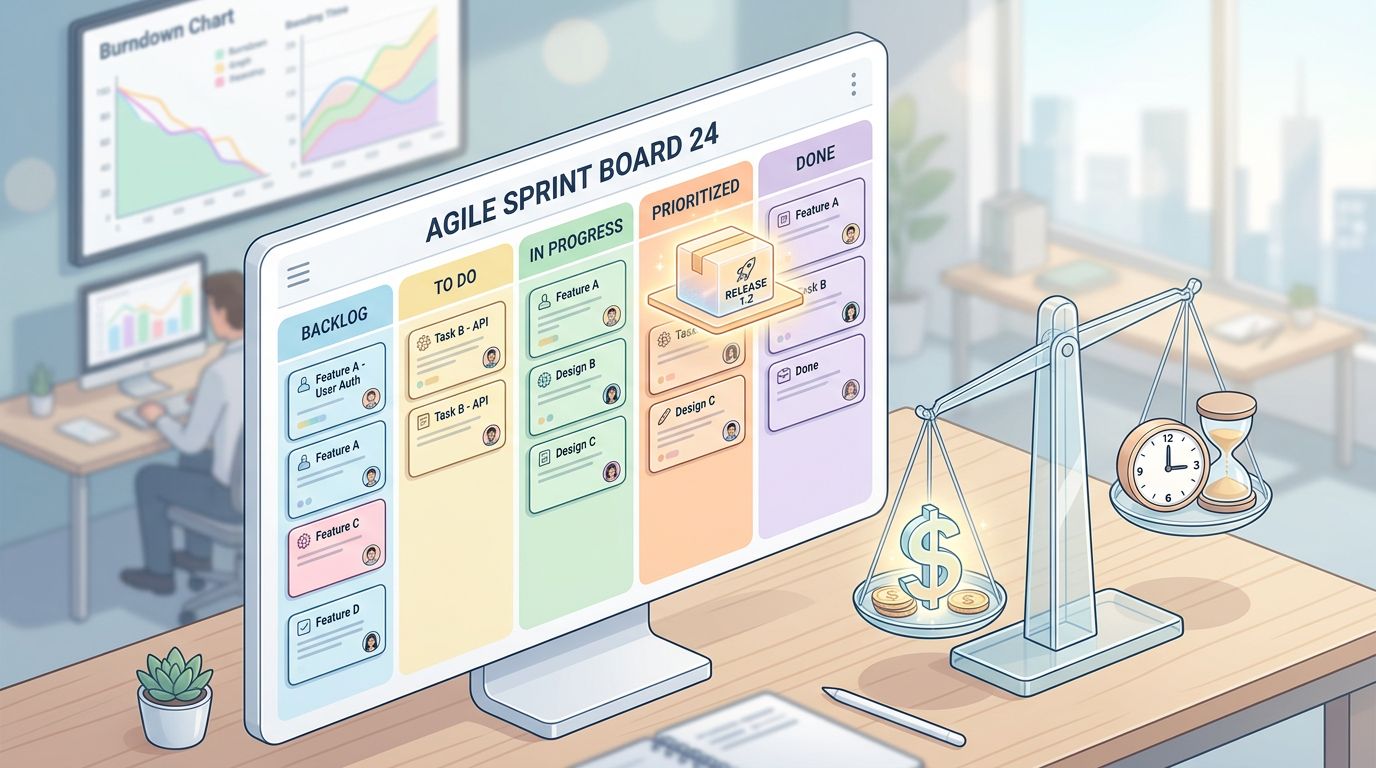
Here’s the tradeoff I’m making every step:
- A slower ramp reduces risk, but delays learning.
- A faster ramp gets answers sooner, but increases downside.
So I do a quick loss bound. Example: if you do 20,000 checkout starts per day and your baseline conversion is 4%, you get 800 orders/day. If average gross profit per order is $30, that’s $24,000/day gross profit. A 5% relative conversion drop (4.0% to 3.8%) is 40 fewer orders, about $1,200/day gross profit. If you can’t detect that drop quickly, you’re gambling.
This is where behavioral science shows up in a very practical way. Novel UI can pull attention away from the primary action. Defaults can create friction. Seemingly “small” copy changes can trigger loss aversion. Your rollout plan should assume humans will behave weirdly.
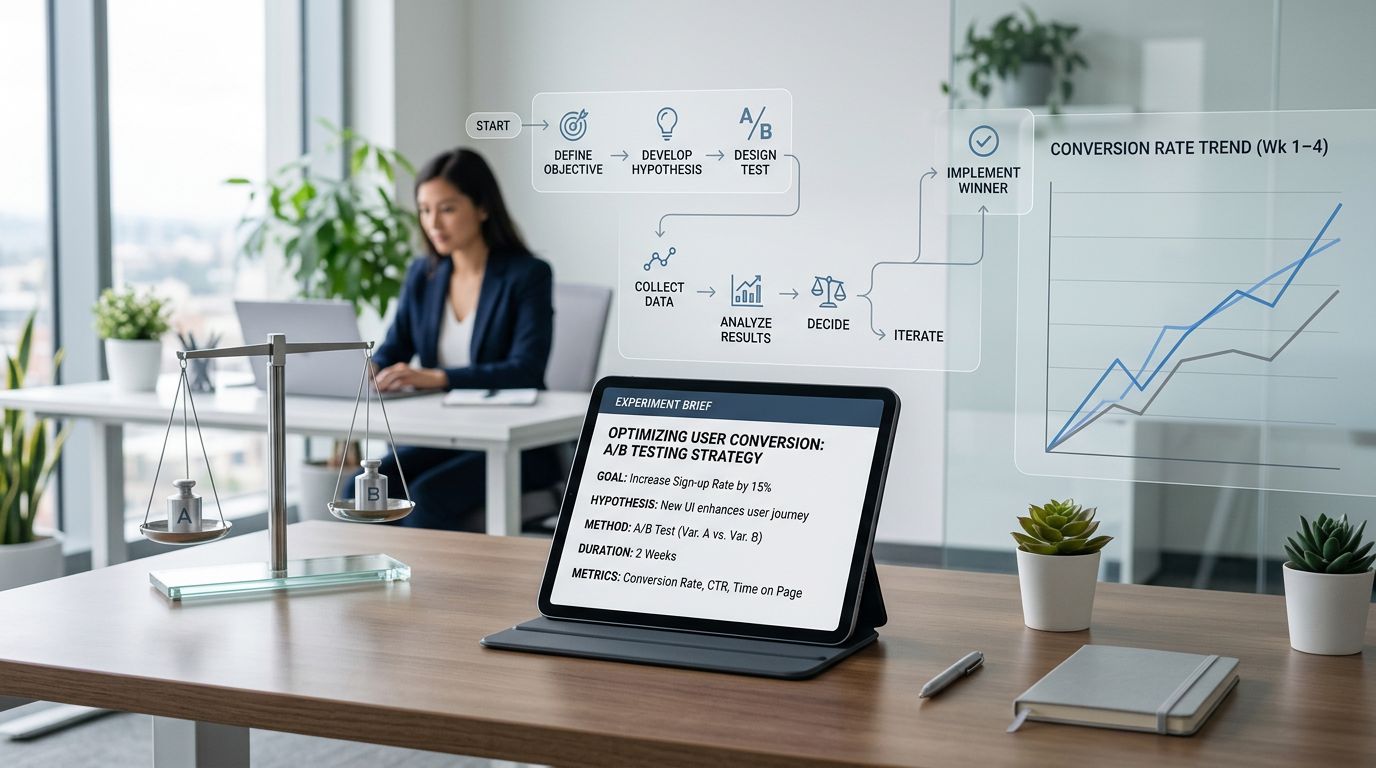
Using feature flags for A/B testing without lying to yourself
Once the rollout is stable, I switch modes: now I care about causality, not just safety.
Flag-based A/B testing is great because it keeps product-led growth moving. You can ship code behind a flag using an experimentation platform, then test variations for targeting and personalization without re-releasing (unlike traditional code deployment). Still, most failures I see come from bad experiment mechanics, not bad ideas.
If you want a technical walk-through, this flag-based A/B testing implementation guide covers the plumbing at a high level.
The three mechanics I won’t compromise on
1) Random assignment to user segments at the right unit
If users share accounts, assign at the account level. If they share devices, be careful. Cross-contamination quietly kills A/B testing.
2) Sample size that matches your real minimum detectable effect
Founders often want to detect a 1% lift. Meanwhile, their traffic can only detect a 10% lift in two weeks. That’s not ambition, it’s math. I use an A/B sample size calculator before I commit engineering time, because underpowered tests are an expensive way to feel busy.
3) One primary metric, plus guardrails
Pick the metric that maps to your growth strategy. For many B2B products, that’s activated trials or qualified pipeline, not clicks. Then add guardrails like latency, errors, refunds, and support contacts.
A quick warning on “peeking”: if you check results daily and stop when you see green, you’ll ship false positives. If you need speed, use sequential methods or Bayesian monitoring, but pick it up front. Don’t wing it.
Making the rollout decision, then compounding the win
After the experiment ends, the hard part starts. You still have to decide. Most teams either over-trust the p-value or ignore the data because it’s inconvenient.
I make the call using three questions:
1) Is the effect real enough to matter financially?
A statistically “significant” 0.3% lift can be meaningless. On the other hand, a 3% lift with wide uncertainty can still be worth it if upside dwarfs downside. I translate lift into dollars, then compare it to engineering and opportunity cost.
2) Who did it work for?
Average lift hides segments. In startup growth, I care about new users, not power users. A change that helps veterans can hurt onboarding. That’s where applied AI can help, not by “deciding” for you, but by surfacing patterns faster than a human can scan.
3) What’s the next best bet?
The fastest teams compound. They don’t celebrate one win, they turn it into a sequence. If you’re tracking learnings well, tools like AI next test recommendations can suggest follow-ups, catch duplicates, keep experimentation tied to what actually worked before, and assist with post-experiment cleanup by recommending which feature flags to remove and reduce technical debt.
When I need alignment, I share results in a format that reduces debate. A clean artifact beats a meeting. It boosts developer productivity and streamlines release management between product and engineering. That’s why I like having shareable experiment results ready for execs, product, and engineering, without rebuilding slides every time.
Decision making gets easier when everyone can see the same evidence, with the same context.
Short actionable takeaway (use this decision rule)
If a flagged change can plausibly hit a revenue-critical funnel, I don’t ship it to 100% unless I can answer “yes” to all three:
- I have real-time control to turn it off in minutes.
- I can measure exposure and conversion reliably.
- I know the loss bound if it goes wrong for 24 hours.
If you can’t say yes, slow down the ramp or narrow the audience. Speed is only useful when you can control the downside.
Conclusion
Feature flags are not just for safer deploys. Used well, they’re a way to run faster experimentation while protecting conversion and trust within the broader DevOps lifecycle of continuous integration and continuous delivery. I treat every rollout like a financial decision under uncertainty, because that’s what it is. Start with a cautious feature flags rollout, graduate to disciplined A/B testing, then iterate based on what the data and behavioral science both suggest. With SDK integration and feature variables supporting your release strategy, your next release should feel boring, and your growth strategy should get stronger anyway.













You must be logged in to post a comment.